As engineering problems grow more complex, the need for accurate and reliable simulation becomes critical. Companies can no longer depend only on physical testing or simplified calculations to validate designs. Finite Element Analysis has become an essential part of modern engineering workflows, enabling teams to predict performance with confidence. This article explains how fea services address advanced engineering challenges, improve design accuracy, and support better technical decisions across industries.
Finite Element Analysis in Practical Terms
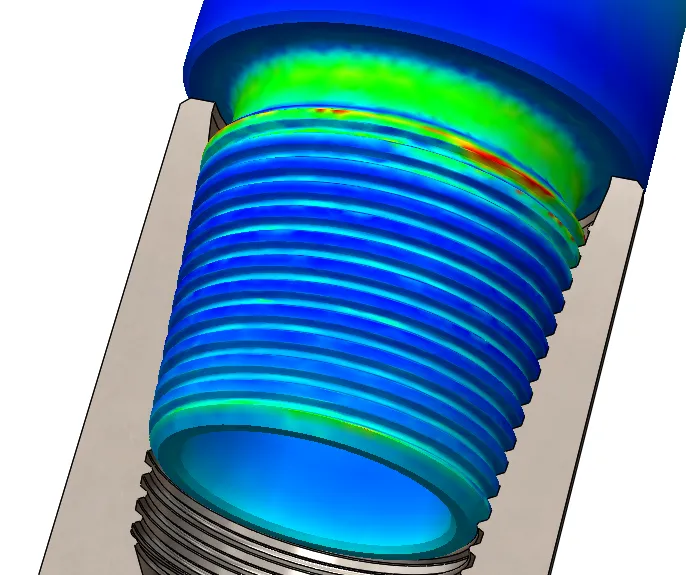
Finite Element Analysis is a computational approach that helps engineers understand how components and structures behave under real operating conditions. By dividing a design into smaller elements, engineers can evaluate stress, deformation, vibration, and thermal effects in detail. This process provides insights that are difficult or impossible to achieve through traditional hand calculations alone.
Why Specialized FEA Services Are Needed
Not all engineering problems are straightforward. Complex geometries, advanced materials, and extreme loading conditions require specialized FEA services. These services go beyond basic simulations by incorporating realistic assumptions, advanced material models, and validated methodologies. The result is higher confidence in design decisions and reduced uncertainty during development.
Key Analysis Areas Covered by FEA Services
Professional FEA services include a range of analysis types tailored to specific engineering requirements.
Linear Analysis for Foundational Design Checks
Linear analysis is used to evaluate how structures behave under normal loading conditions where materials remain elastic. It provides a quick and effective way to confirm that stresses and deformations stay within allowable limits during early design stages.
Nonlinear Analysis for Complex Interactions
Nonlinear analysis becomes essential when materials yield, contacts change, or deformations are large. This approach captures real-world behavior more accurately, making it critical for components subjected to high loads, impact conditions, or complex contact interactions.
Fatigue Analysis for Lifecycle Prediction
Repeated loading can lead to fatigue failure over time. Fatigue analysis evaluates how cyclic stresses affect a component’s lifespan. By predicting service life and identifying critical stress locations, engineers can design products that meet durability and reliability targets.
Buckling Analysis for Stability Assurance
Buckling analysis focuses on structural stability under compressive loads. Slender and thin-walled structures are especially vulnerable to sudden instability. Identifying critical buckling loads helps engineers ensure safety and compliance with design standards.
The Advantage of Professional FEA Analysis Services
Simulation accuracy depends heavily on experience and engineering judgment. fea analysis services provided by skilled analysts ensure that models reflect real operating conditions. Experts carefully select boundary conditions, refine meshes, and interpret results to deliver meaningful conclusions rather than raw data.
Industries That Rely on Advanced FEA Services
FEA services are widely used in automotive, aerospace, energy, construction, and industrial manufacturing sectors. Automotive companies use FEA to improve durability and safety. Aerospace engineers rely on it to achieve lightweight yet strong designs. Industrial manufacturers apply FEA to optimize machinery performance and reduce downtime.
Enhancing Design Efficiency Through Simulation

One of the key benefits of FEA services is improved design efficiency. Virtual simulations allow engineers to evaluate multiple design options quickly. This reduces reliance on physical prototypes, shortens development timelines, and lowers overall project costs.
Selecting the Right FEA Service Provider
Choosing an FEA partner is a strategic decision. Look for providers with deep engineering expertise, experience in relevant industries, and a structured simulation workflow. Clear documentation, validation practices, and collaborative communication are essential for achieving reliable results.
Long-Term Benefits of Using FEA Services
Beyond initial development, FEA services support continuous improvement. Simulation data can be reused for design updates, root-cause failure analysis, and future product development. Over time, this builds a strong engineering knowledge base and improves consistency across projects.
Conclusion
Specialized FEA services play a crucial role in solving advanced engineering challenges. By combining multiple analysis methods with expert interpretation, FEA enables accurate performance prediction, reduces risk, and improves product reliability. Organizations that integrate professional FEA early in their design process gain long-term advantages in quality, efficiency, and innovation.
Frequently Asked Questions
What makes specialized FEA services different from basic simulations?
Specialized services use advanced modeling techniques, realistic assumptions, and expert validation to address complex engineering problems more accurately.
Can FEA services handle complex geometries and materials?
Yes, FEA services are well-suited for complex shapes, assemblies, and advanced materials where traditional methods fall short.
How do FEA analysis services support long-term product reliability?
They help predict fatigue life, identify stability risks, and validate designs early, reducing the chance of failures during product use.